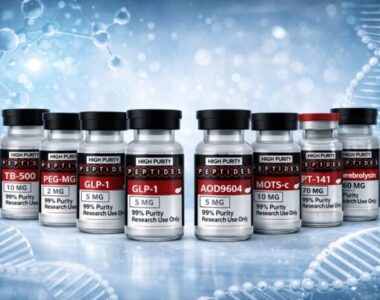

SLUPP peptide (Synthetic Leukocyte-Associated Upregulatory Peptide Precursor) is an emerging research compound that has attracted attention in immunology, inflammation biology, and tissue signaling studies. Although still relatively new compared to widely studied peptides such as BPC-157 or TB-500, SLUPP has shown intriguing properties related to immune modulation, cellular communication, and protein expression in preclinical models. Understanding its structure, mechanism of action, and experimental limitations is essential for researchers working with this peptide.
What Is SLUPP Peptide?
SLUPP is a synthetic peptide designed to mimic specific signaling motifs found in naturally occurring leukocyte-associated regulatory proteins. These motifs are believed to play a role in how immune cells communicate, respond to injury, and regulate inflammatory pathways. Unlike traditional anti-inflammatory compounds that suppress immune activity, SLUPP appears to act more as a signaling modulator, fine-tuning rather than completely inhibiting biological responses.
Researchers have categorized SLUPP as a bioactive regulatory peptide rather than a structural or growth-promoting peptide. This distinction is important because its primary function is thought to involve cellular signaling and immune response modulation rather than direct tissue regeneration or anabolic activity.
Structural Characteristics
SLUPP is composed of a short chain of amino acids arranged to resemble naturally occurring regulatory peptides in the immune system. Its design includes specific hydrophilic and hydrophobic regions that allow it to interact with cell surface receptors and intracellular signaling pathways. This dual compatibility enhances its potential to influence both extracellular and intracellular biological processes.
Because SLUPP is synthetic, its sequence can be precisely controlled in laboratory synthesis, ensuring high purity and consistency across batches. This is particularly valuable for researchers who require reproducible results in controlled experiments.
Mechanisms of Action
SLUPP is believed to act primarily through immune-related signaling pathways, including cytokine modulation and leukocyte activation regulation. In preclinical studies, it has been associated with changes in inflammatory mediator expression, suggesting that it may help balance pro-inflammatory and anti-inflammatory responses.
Additionally, SLUPP may influence cellular stress response pathways, including oxidative stress regulation and mitochondrial signaling. These effects make it a promising compound for studying immune-metabolic interactions and cellular resilience under stress conditions.
Research Applications
- Immunology and inflammation research
- Cell signaling and cytokine modulation studies
- Oxidative stress and cellular resilience models
- Leukocyte activation and migration experiments
- Neuroinflammation and immune-brain interaction research
In immunological research, SLUPP serves as a valuable tool for investigating how synthetic peptides can influence leukocyte behavior without directly suppressing immune function. This makes it particularly relevant in studies exploring balanced immune modulation rather than outright immunosuppression.
Delivery and Bioavailability Considerations
Like many peptides, SLUPP is sensitive to enzymatic degradation in biological systems. This presents challenges for delivery, particularly in oral or systemic applications. Researchers often explore alternative delivery methods such as encapsulation, nanoparticle carriers, or modified peptide analogs to enhance stability and bioavailability.
Laboratory storage conditions also play a critical role in maintaining SLUPP integrity. The peptide is typically stored in lyophilized form at low temperatures and reconstituted in sterile conditions immediately before use to minimize degradation.
Quality Control and Purity
As with all synthetic peptides, SLUPP must meet strict quality control standards for research use. Reputable suppliers should provide Certificates of Analysis (COA) that include peptide purity, identity verification via mass spectrometry, and absence of contaminants such as endotoxins or residual solvents.
Analytical techniques such as HPLC and peptide sequencing are commonly used to confirm batch consistency. Researchers should prioritize vendors that offer transparent testing documentation and traceable manufacturing processes.
Limitations and Future Directions
Despite its potential, SLUPP remains a relatively underexplored peptide, and many of its effects are still being characterized. Variability in experimental design, dosage, and delivery methods can lead to inconsistent results across studies.
Future research is likely to focus on clarifying its exact molecular targets, optimizing delivery systems, and exploring potential applications in immune-related disorders and inflammatory models. Comparative studies with other regulatory peptides may also help define its unique biological role.
Conclusion
SLUPP peptide represents a promising but still developing area of peptide research. Its potential to modulate immune signaling without broad suppression makes it a valuable tool for studying balanced inflammatory responses and cellular communication.
However, challenges related to stability, delivery, and limited data underscore the need for continued investigation. As research progresses, SLUPP may provide deeper insights into immune regulation, cellular resilience, and the therapeutic potential of synthetic regulatory peptides.