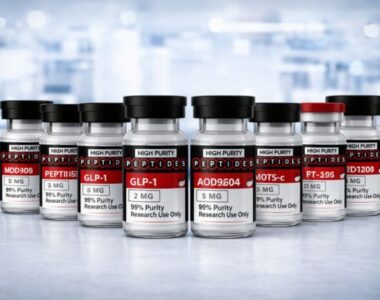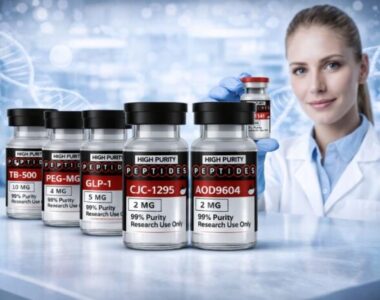
Premium Peptides is a topic in laboratory and preclinical research. This resource outlines the scientific context, how to assess the evidence, and which quality controls matter when U.S. laboratories evaluate research materials. It is educational content for qualified research settings—not dosing, treatment, or personal-use guidance. Researchers comparing materials can review the research peptide catalog and the site’s laboratory quality standards while qualifying a study material.
Research context and terminology
Purity percentage alone does not establish identity or suitability. Researchers should examine the analytical method, batch number, chromatogram, expected mass, sample handling, and whether the documentation corresponds to the material received.
Premium peptides refer to research-grade peptide compounds manufactured to meet elevated standards of purity, consistency, and analytical verification. In scientific research, peptide quality plays a critical role in ensuring reliable experimental outcomes. Premium peptides are designed for laboratories that require precise molecular composition and reproducibility across studies.
As peptide research expands across fields such as molecular biology, biochemistry, and regenerative science, demand has increased for peptides that meet stringent quality benchmarks. Premium peptides are differentiated not by intended use, but by the rigor of their synthesis, purification, and documentation processes.
Premium peptides are typically characterized by high purity levels, often verified through analytical methods such as high-performance liquid chromatography (HPLC) and mass spectrometry (MS). These analytical techniques confirm molecular weight, sequence accuracy, and overall purity, ensuring the peptide matches its intended structure.
In addition to analytical validation, premium peptides are produced under controlled manufacturing conditions to minimize contamination, degradation, or batch-to-batch variability. This level of quality control is essential for reproducible scientific research and accurate interpretation of experimental results.
A defining feature of premium peptides is comprehensive documentation. Certificates of Analysis (COAs) typically accompany these peptides, providing detailed information on purity percentage, analytical methods used, and batch identification. This transparency allows researchers to verify peptide integrity before use.
High purity is particularly important in peptide research because impurities can interfere with biological assays, skew data, or introduce confounding variables. Premium peptides help reduce these risks by offering clearly defined molecular profiles suitable for sensitive experimental systems.
Applications in Scientific Research
Premium peptides are widely used across a variety of research disciplines. In cell biology, they are employed to study receptor binding, intracellular signaling, and gene expression pathways. In biochemical research, they serve as substrates, inhibitors, or signaling models for enzyme and protein interaction studies.
Researchers in regenerative and aging-related fields also rely on premium peptides to investigate cellular repair mechanisms, stress responses, and tissue-specific signaling. The consistent quality of premium peptides supports long-term studies where reproducibility is essential.
Premium Peptides vs Standard Peptides
The primary distinction between premium peptides and standard research peptides lies in quality assurance rather than peptide function. While both may share identical amino acid sequences, premium peptides undergo additional purification steps, testing protocols, and documentation requirements.
Storage and Handling Considerations
Proper storage and handling are essential to preserve the integrity of premium peptides. Researchers typically store peptides under controlled temperature conditions and protect them from moisture, light, and repeated freeze-thaw cycles. Adhering to recommended handling protocols helps maintain peptide stability throughout the research process.
Premium peptides are intended strictly for laboratory research and educational purposes. They are not approved for human or veterinary use. All experimentation should be conducted in accordance with institutional guidelines, safety protocols, and applicable regulations.
Premium peptides represent the highest standard in peptide research materials, offering verified purity, detailed documentation, and consistent performance. By supporting accurate, reproducible experimentation, premium peptides play a vital role in advancing scientific understanding across multiple disciplines. For researchers seeking reliability and precision, premium peptides remain an essential component of high-quality laboratory research.
How to evaluate research quality
A strong Premium Peptides evaluation begins with identity. The listing, material name, salt or counter-ion where relevant, quantity, lot number, and analytical record should agree. High-performance liquid chromatography can describe relative purity, while mass spectrometry can support identity by comparing observed and expected mass. Neither result alone proves biological activity, sterility, or fitness for this project’s protocol.
U.S. laboratory procurement checks
Before a U.S. laboratory orders material for a Premium Peptides project, purchasing and safety teams should confirm that the work is lawful, approved, and consistent with research-only terms. Preserve the supplier identity, lot and quantity, shipping condition, receipt date, product page, and analytical documents. A mismatch in labeling, seals, quantity, or paperwork is a reason to quarantine the shipment until the discrepancy is resolved.
Continue researching this topic
- Pura Peptides related research overview
- AHK-Cu Peptide comparison and evidence guide
- BPC-157—Research Applications, Mechanism, and Laboratory Considerations laboratory quality discussion
Frequently asked questions
What should a laboratory verify before studying Premium Peptides?
For Premium Peptides, confirm identity, lot-specific analytical documentation, labeling, chain of custody, and alignment with the predefined protocol. Required tests depend on the planned study; a stated purity percentage is only one part of qualification.
Is this article personal-use or medical guidance?
No. It does not recommend use, administration, or dosing. Products discussed by High Purity Peptides are intended only for lawful laboratory research and are not for human or veterinary use.
Key takeaway
A credible Premium Peptides project starts with a precise question, appropriate controls, traceable material, and cautious interpretation. Use analytical records and primary literature, preserve batch documentation, and report limitations alongside results.
Research-use notice: This content is for educational and laboratory-research purposes only. It is not medical advice. Research materials referenced here are not intended for human or veterinary use, diagnosis, treatment, or prevention of disease.