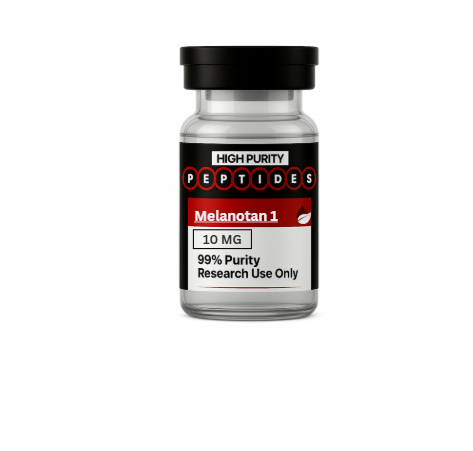
Melanotan 1 vs Melanotan 2 are synthetic peptides widely studied in laboratory research for their effects on skin pigmentation, tanning, and UV protection. While originally derived from melanocyte-stimulating hormones, these peptides are now used in experimental models to explore mechanisms of melanin production, cellular signaling, and hormone-mediated activity.
Researchers often compare Melanotan 1 and Melanotan 2 to understand differences in activity, stability, and potential physiological effects. Both peptides are supplied in vials, facilitating precise dosing, controlled experiments, and reproducible results.
This guide provides an overview of Melanotan 1 vs. 2, their research applications, handling best practices, and sourcing considerations for laboratory use.
Key Differences Between Melanotan 1 and Melanotan 2
Understanding the structural and functional differences between these two peptides is essential for experimental planning:
Melanotan 1
- Structure: Linear peptide
- Primary Research Focus: Skin pigmentation and sunless tanning effects
- Experimental Applications: Studying melanogenesis and melanin distribution in controlled lab models
Melanotan II
- Structure: Cyclic peptide
- Additional Activity: Demonstrated effects on appetite modulation and libido in experimental studies
- Experimental Applications: Broader physiological studies including melanogenesis, metabolic signaling, and receptor activity
Shared Characteristics
- Delivered in vials to ensure accurate dosing and stability
- Requires purity verification to maintain reliable experimental results
- Intended for laboratory research only, not for human or veterinary use
By understanding these distinctions, researchers can design experiments that effectively compare peptide activity, optimize dosages, and evaluate biological responses in vitro or in preclinical models.
Research Best Practices for Melanotan Peptides
To ensure reproducible and accurate results in peptide research, laboratories should follow these guidelines:
1. Handling Protocols
- Always use sterile techniques when working with peptide vials
- Minimize exposure to air and contaminants during reconstitution and dosing
- Wear gloves and follow institutional safety guidelines
2. Storage Recommendations
- Store peptides lyophilized in a cool, dry environment
- Avoid repeated freeze-thaw cycles after reconstitution
- Protect from light and moisture to maintain bioactivity
3. Documentation
- Track batch numbers, dosing schedules, and experimental conditions
- Record observations carefully to ensure reproducibility across experiments
4. Supplier Verification
- Ensure peptides are high-purity (>98%)
- Verify each batch with a Certificate of Analysis (COA)
- Source from trusted vendors with clear handling and storage guidelines
Adhering to these best practices ensures peptide integrity and supports reliable outcomes in research studies comparing Melanotan 1 and 2.
Buying Melanotan Peptides for Research Use
For laboratories seeking to buy Melanotan 1 or Melanotan 2, sourcing from verified suppliers is crucial. Key considerations include:
- High-purity peptide (>98%) with documented COA
- Batch traceability to ensure reproducibility
- Lab-grade, contamination-resistant packaging
- Transparent storage and handling instructions
- Supplier reputation for providing research-grade peptides
Purchasing from trusted vendors ensures experimental consistency, prevents contamination, and maintains peptide activity throughout research studies.
Conclusion & Disclaimer
Comparing Melanotan 1 vs. 2 in laboratory research requires controlled experimental conditions, high-purity peptides, and rigorous handling protocols. Understanding structural differences, storage requirements, and supplier verification is essential for producing reliable, reproducible results.
Important: Melanotan 1 and Melanotan 2 are for research use only and not intended for human or veterinary consumption. Always follow institutional safety guidelines and laboratory best practices when handling these peptides.