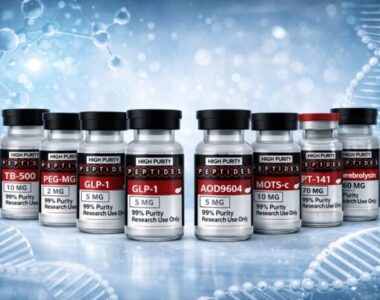
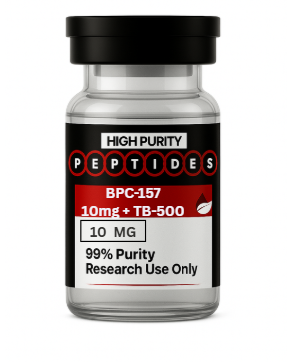
TB-500 and BPC-157 are two of the most widely discussed peptides in regenerative and tissue-repair research. Although structurally different, both are frequently studied for their effects on healing, inflammation, and tissue remodeling in laboratory and preclinical models. Understanding how these peptides function individually and together is a major area of interest in experimental biology.
What Is TB-500?
TB-500 is a synthetic fragment of thymosin beta-4 (TB-4), a naturally occurring peptide found in virtually all human cells. Thymosin beta-4 plays a role in cell migration, tissue repair, angiogenesis (formation of new blood vessels), and inflammation regulation. TB-500 is designed to mimic key functional aspects of TB-4 while offering improved stability in experimental settings.
In preclinical studies, TB-500 has been associated with increased cell mobility, enhanced wound closure, and modulation of inflammatory responses. Researchers have explored its potential effects on muscle, tendon, and skin repair, making it a valuable model peptide for studying regenerative biology.
What Is BPC-157?
BPC-157 (Body Protection Compound-157) is a 15-amino-acid peptide originally derived from a protein found in human gastric juice. It has been extensively studied in animal models for its effects on tissue healing, particularly in muscle, tendon, ligament, and gastrointestinal research.
Experimental evidence suggests that BPC-157 may influence angiogenesis, nitric oxide signaling, and tissue regeneration pathways. Because of its stability and broad biological activity, it has become a focal point in research related to soft tissue repair and inflammation control.
Why Study TB-500 and BPC-157 Together?
Researchers are interested in combining TB-500 and BPC-157 because they appear to act through different but complementary biological pathways. TB-500 is primarily associated with cell migration and structural repair, while BPC-157 is more closely linked to vascular signaling and inflammation modulation.
In theory, this dual approach could provide a broader regenerative effect in preclinical models. TB-500 may support cellular rebuilding, while BPC-157 may enhance blood vessel formation and reduce inflammatory stress on damaged tissues.
Mechanisms of Action
TB-500 is believed to influence actin dynamics, a key component of the cellular cytoskeleton. This process is critical for cell movement, tissue repair, and structural integrity. By modulating actin polymerization, TB-500 may facilitate the migration of repair cells to sites of injury.
BPC-157, on the other hand, is thought to interact with nitric oxide pathways and angiogenic signaling mechanisms. This may promote improved blood flow to injured tissues, supporting nutrient delivery and waste removal during the healing process.
Findings From Preclinical Research
Animal studies investigating TB-500 and BPC-157 have shown promising results in models of muscle tears, tendon injuries, and inflammatory conditions. Some research suggests that these peptides may accelerate tissue repair and improve functional recovery compared to controls.
However, it is important to note that most of this evidence comes from preclinical studies. Large-scale human clinical trials evaluating the safety and efficacy of TB-500 and BPC-157, alone or in combination, are currently limited.
Scientific Considerations
Because TB-500 and BPC-157 are primarily used in laboratory research, their effects in humans are not fully understood. Scientists emphasize the need for controlled studies to determine pharmacokinetics, tissue distribution, and long-term safety.
Researchers also consider peptide purity, stability, and formulation when designing experiments. Variations in manufacturing quality can significantly impact study outcomes.
TB-500 vs. BPC-157: Key Differences
Although both peptides are associated with tissue repair, they differ in origin and primary biological targets. TB-500 is derived from a naturally occurring intracellular peptide involved in structural cell function, while BPC-157 originates from a gastric protein with systemic signaling effects.
This distinction makes them useful for studying different aspects of regeneration, with TB-500 focusing more on cellular architecture and BPC-157 emphasizing vascular and inflammatory pathways.
Conclusion
The combination of TB-500 + BPC-157 represents a compelling area of regenerative peptide research. Their complementary mechanisms offer insights into how different biological pathways interact during tissue repair and inflammation control.
While preclinical findings are promising, further research is required to fully understand their potential applications, limitations, and safety profiles. For now, TB-500 and BPC-157 remain important tools for advancing our knowledge of peptide-based tissue regeneration.