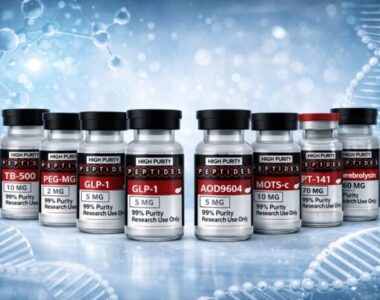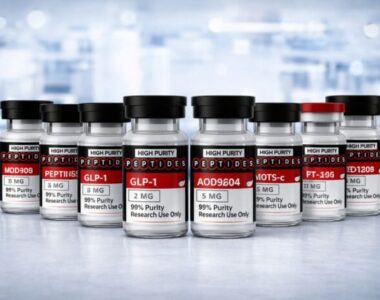
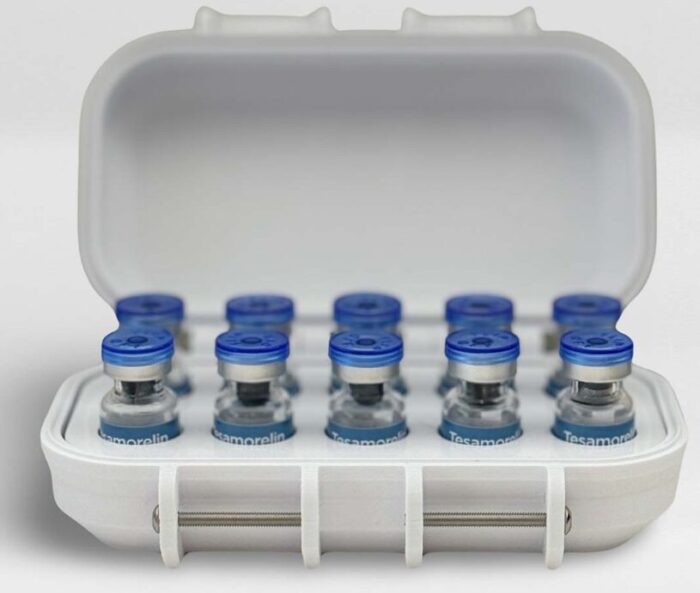
The phrase “Pure RX Peptides” is commonly encountered in online searches related to peptide quality, laboratory research standards, and analytical purity. In scientific contexts, such terms are best interpreted as references to chemically verified peptides intended for controlled research environments rather than therapeutic or clinical use. This article provides an educational overview of what purity-focused peptide research entails and how researchers evaluate peptide quality.
What Are Research Peptides?
Peptides are short chains of amino acids that serve as signaling molecules in biological systems. In laboratory research, peptides are used to investigate cellular communication, metabolic regulation, neurological signaling, immune responses, and tissue regeneration pathways. Research peptides differ from pharmaceutical products in that they are not formulated for patient use. Instead, they are synthesized and supplied to allow scientists to study molecular mechanisms under controlled experimental conditions.Understanding the Term “RX” in Peptide Searches
The inclusion of “RX” in peptide-related searches often reflects an interest in pharmaceutical-grade quality or prescription-level purity. However, within research settings, peptide quality is determined by analytical verification rather than labels or terminology. A peptide’s suitability for research depends on its chemical identity, purity percentage, and batch consistency. From a scientific perspective, “Pure RX Peptides” suggests a focus on rigorously tested compounds that meet high analytical standards.Why Peptide Purity Matters in Research
Peptide purity plays a critical role in the reliability of experimental results. Even small amounts of impurities can influence receptor binding, enzymatic activity, or signaling pathways, potentially leading to misleading conclusions. High purity is especially important in studies involving:- Hormone and growth factor signaling
- Neurotransmitter and cognitive research
- Inflammation and immune modulation
- Metabolic and mitochondrial function
- Tissue repair and regenerative models
How Purity Is Verified
Scientific validation of peptide purity relies on standardized analytical techniques. The most common methods include:- High-Performance Liquid Chromatography (HPLC): Measures purity and detects contaminants.
- Mass Spectrometry (MS): Confirms molecular weight and structural accuracy.
- Amino Acid Analysis: Verifies sequence composition.
Purity vs Efficacy Claims
It is important to distinguish between chemical purity and biological outcomes. A highly pure peptide does not guarantee specific experimental results. Instead, purity ensures that observed effects are attributable to the intended compound rather than contaminants. Responsible research avoids unverified health claims and focuses on reproducibility, peer review, and transparent methodology.Storage and Handling Considerations
Even peptides with verified purity can degrade if mishandled. Most research peptides are supplied as lyophilized powders to enhance stability. Proper storage typically involves cool, dry conditions and protection from light and moisture. Once reconstituted, peptides may have limited stability depending on solvent, temperature, and duration of use. Adhering to proper laboratory handling protocols helps preserve peptide integrity.Evaluating Quality Claims Online
Searches for “Pure RX Peptides” often return a mixture of educational material and marketing-driven content. Researchers should evaluate quality claims by focusing on documentation rather than branding language. Key indicators of research-grade quality include:- Batch-specific COAs
- Clearly stated purity percentages
- Disclosure of analytical methods
- Consistent labeling and storage guidance