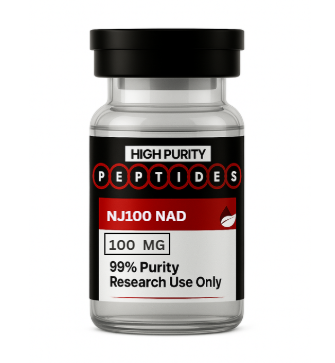
NAD+ peptides refer to a growing class of research molecules designed to influence cellular levels of nicotinamide adenine dinucleotide (NAD+), a critical coenzyme involved in energy metabolism, DNA repair, and cellular longevity. While NAD+ itself is a small nucleotide rather than a peptide, researchers have developed peptide-based delivery systems and peptide-conjugated NAD+ analogs to study how NAD+ signaling can be modulated in biological systems.
NAD+ is essential for mitochondrial function, redox balance, and numerous enzymatic reactions that sustain cellular life. As organisms age, NAD+ levels naturally decline, which has led to extensive scientific interest in compounds that might support or restore NAD+ metabolism. NAD+ peptides have emerged as one experimental approach to investigate these processes in laboratory and preclinical research.
What Is NAD+?
NAD+ is a central molecule in cellular metabolism, acting as a cofactor in redox reactions that allow cells to convert nutrients into usable energy (ATP). It participates in glycolysis, the citric acid cycle, and oxidative phosphorylation within mitochondria. Beyond energy production, NAD+ is also required for DNA repair enzymes such as PARPs and for sirtuins, a family of proteins associated with cellular stress resistance and longevity.
Because of these roles, NAD+ is often described as a “master regulator” of cellular health. Declining NAD+ availability has been linked in research to mitochondrial dysfunction, increased oxidative stress, and age-related metabolic changes. This has motivated scientists to explore ways to maintain or enhance NAD+ signaling through precursors, analogs, and peptide-based delivery strategies.
What Are NAD+ Peptides?
NAD+ peptides are not simply NAD+ molecules in peptide form. Instead, the term generally refers to peptide-based systems designed to interact with or influence NAD+ pathways. These may include peptides that enhance NAD+ biosynthesis, stabilize NAD+ within cells, or facilitate its transport across biological membranes.
Some experimental designs involve conjugating NAD+ or its precursors (such as NMN or NR) to short peptides that improve cellular uptake or tissue targeting. Other approaches involve peptides that activate enzymes involved in NAD+ production or protect NAD+ from degradation. Together, these strategies aim to provide researchers with more precise tools for studying NAD+ biology.
Mechanisms of Action
The mechanisms behind NAD+ peptides vary depending on their design. Some peptides are engineered to enhance the activity of NAMPT, a key enzyme in the NAD+ salvage pathway, thereby increasing intracellular NAD+ levels. Others may inhibit NAD+-consuming enzymes such as CD38, which can deplete NAD+ during aging or inflammation.
Peptide-based delivery systems can also improve the bioavailability of NAD+ precursors by facilitating their transport across cell membranes or protecting them from rapid breakdown. This allows researchers to study NAD+ dynamics in specific tissues or cellular compartments with greater precision than traditional small-molecule approaches.
NAD+ Peptides in Scientific Research
Much of the current research on NAD+ peptides is focused on aging, mitochondrial function, and metabolic health. In cell culture studies, scientists examine how these peptides influence mitochondrial respiration, oxidative stress levels, and DNA repair capacity. These experiments help clarify whether NAD+ modulation can improve cellular resilience under stress conditions.
Animal models have also been used to explore whether NAD+ peptides can affect tissue regeneration, inflammation, or metabolic performance. Some studies suggest that enhancing NAD+ signaling may support improved mitochondrial efficiency, reduced oxidative damage, and better cellular stress responses, although results remain preliminary and require further validation.
Comparison to NAD+ Precursors
Traditional approaches to increasing NAD+ levels often involve small-molecule precursors such as nicotinamide riboside (NR) or nicotinamide mononucleotide (NMN). While these compounds can raise NAD+ levels systemically, they lack the tissue specificity that peptide-based systems may offer.
NAD+ peptides, by contrast, can be engineered to target specific cell types or organ systems, allowing researchers to study localized effects of NAD+ modulation. This makes them valuable tools for dissecting the role of NAD+ in different biological contexts.
Safety, Limitations & Current Understanding
NAD+ peptides remain largely in the experimental stage, and their full safety profile has not been established in humans. Most data come from laboratory and animal studies, which do not always translate directly to clinical outcomes. Researchers emphasize that these compounds should be handled and studied under strict regulatory and ethical guidelines.
Future research must address questions about long-term effects, optimal dosing strategies, and potential off-target interactions before NAD+ peptides can be fully understood. For now, they represent an exciting but still developing area of metabolic and aging research.
Conclusion
NAD+ peptides offer a novel approach to studying and modulating one of the most fundamental molecules in cellular biology. By combining peptide engineering with NAD+ metabolism, researchers have gained new tools for exploring mitochondrial function, DNA repair, and age-related cellular decline.
Although much remains to be learned, ongoing investigations into NAD+ peptides continue to deepen our understanding of how energy metabolism and cellular resilience are regulated at the molecular level. As research progresses, these peptides may provide valuable insights into the biology of aging and metabolic health.