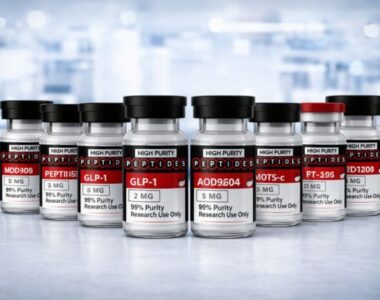
Tesamorelin vs Sermorelin is a topic in laboratory and preclinical research. This article examines the scientific context, how to assess the evidence, and which quality controls matter when U.S. laboratories evaluate research materials. It is educational content for qualified research settings—not dosing, treatment, or personal-use guidance. Study teams evaluating materials can review the research peptide catalog and the site’s laboratory quality standards during protocol planning.
Research context and terminology
Tesamorelin and sermorelin are discussed in relation to growth-hormone-releasing pathways, while CJC-1295 and ipamorelin involve distinct molecular designs and signaling questions. Comparisons should control for assay, model, and exposure.
The comparison of tesamorelin vs. sermorelin is a common topic in peptide and endocrine research, particularly in studies focused on growth hormone (GH) modulation, metabolic regulation, and tissue regeneration. Both tesamorelin and sermorelin are classified as growth hormone–releasing hormone ( GHRH ) analogs, yet they differ significantly in molecular structure, stability, receptor interaction, and downstream biological effects.
Understanding the distinctions between tesamorelin and sermorelin is essential for researchers designing experiments involving GH secretion, IGF-1 signaling, and metabolic adaptation.
Tesamorelin vs. Sermorelin: What Is Sermorelin?
Sermorelin is a synthetic fragment of endogenous GHRH, typically composed of the first 29 amino acids of the native hormone. In tesamorelin vs. sermorelin comparisons, sermorelin is often described as the compound that most closely mimics natural GHRH activity.
Sermorelin binds to GHRH receptors in the anterior pituitary gland, stimulating endogenous growth hormone release in a pulsatile and physiologically relevant manner. This makes Sermorelin useful in research models focused on natural GH secretion patterns, circadian rhythm effects, and short-term endocrine signaling.
However, a defining feature in the tesamorelin vs. sermorelin comparison is sermorelin’s relatively short half-life. It is rapidly degraded by circulating enzymes, resulting in transient biological effects. While this limits long-duration activity, it allows researchers to study acute GH responses without prolonged receptor stimulation.
Tesamorelin and Sermorelin: What Is Tesamorelin?
Tesamorelin is a structurally modified GHRH analog designed to improve peptide stability and resistance to enzymatic degradation. In studies comparing tesamorelin vs. sermorelin, tesamorelin is characterized by its longer duration of action and enhanced biological persistence.
These structural modifications allow tesamorelin to maintain prolonged interaction with GHRH receptors, resulting in more sustained GH release and downstream IGF-1 production. Tesamorelin has been extensively studied in research examining visceral adipose tissue, lipid metabolism, and long-term metabolic regulation.
Unlike Sermorelin, which closely mirrors endogenous GHRH, Tesamorelin is optimized for chronic GH modulation, making it particularly valuable in extended experimental models.
Mechanistic Differences Between Tesamorelin vs Sermorelin
A central distinction between tesamorelin and sermorelin lies in pharmacokinetics. Sermorelin’s rapid clearance leads to brief GH pulses that closely resemble physiological secretion. Tesamorelin, in contrast, produces more sustained pituitary stimulation, which can elevate baseline IGF-1 levels over time.
This difference is critical when selecting peptides for research. Studies focused on acute endocrine signaling, pulsatile hormone release, or short-term GH dynamics often favor Sermorelin. Research examining chronic metabolic adaptation, lipid metabolism, or body composition tends to favor tesamorelin due to its prolonged activity.
Tesamorelin vs Sermorelin: Effects on IGF-1 and Metabolism
Both peptides influence insulin-like growth factor 1 (IGF-1) production through GH stimulation, but their effects differ in magnitude and duration. In Tesamorelin vs. Sermorelin research comparisons, Tesamorelin consistently demonstrates stronger and more sustained IGF-1 elevation.
Tesamorelin has shown notable effects on visceral fat reduction and metabolic parameters in preclinical and clinical research. Sermorelin, while capable of increasing IGF-1, typically produces shorter-lived responses, making it more suitable for studies of transient endocrine signaling rather than long-term metabolic change.
Stability and Laboratory Handling: Tesamorelin vs Sermorelin
From a laboratory perspective, Tesamorelin and Sermorelin also differs in handling considerations. Tesamorelin’s enhanced stability allows for greater flexibility in extended research protocols. Sermorelin requires stricter timing and handling due to its shorter half-life and susceptibility to degradation.
Choosing Between Tesamorelin vs Sermorelin for Research
There is no universally “better” option in the tesamorelin and sermorelin comparison. The appropriate peptide depends entirely on research objectives:
Sermorelin is often chosen for studies on natural GH pulsatility, acute hormonal signaling, and short-duration endocrine effects.
Relevant research materials
- Sermorelin Acetate 10mg × 10 vials — review the listing for identity, format, and available batch documentation.
- Sermorelin Acetate 5mg × 10 vials — review the listing for identity, format, and available batch documentation.
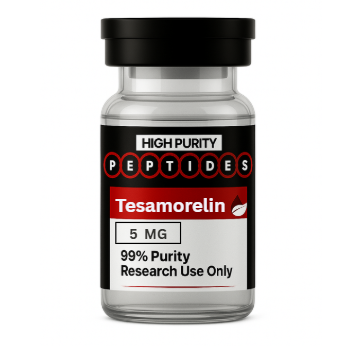
- Tesamorelin 10mg × 10 vials — review the listing for identity, format, and available batch documentation.
How to evaluate research quality
A defensible Tesamorelin vs Sermorelin evaluation begins with identity. The listing, material name, salt or counter-ion where relevant, quantity, lot number, and analytical record should agree. High-performance liquid chromatography can describe relative purity, while mass spectrometry can support identity by comparing observed and expected mass. Neither result alone proves biological activity, sterility, or fitness for this project’s protocol.
Study design and evidence limits
For Tesamorelin vs Sermorelin experiments, define the hypothesis and primary endpoint before selecting a material. Log the model, controls, assay validation, acceptance criteria, and statistical plan. A pilot can justify a larger experiment, but it is not confirmation. In-vitro, animal, and controlled human research answer different questions, so results should not be transferred between evidence levels without justification.
Continue researching this topic
- Tesamorelin and Sermorelin Stack related research overview
- AHK-Cu Peptide comparison and evidence guide
- KPV Peptide laboratory quality discussion
Frequently asked questions
What should a laboratory verify before studying Tesamorelin vs Sermorelin?
For Tesamorelin vs Sermorelin, confirm identity, lot-specific analytical documentation, labeling, chain of custody, and alignment with the predefined protocol. Required tests depend on the planned study; a stated purity percentage is only one part of qualification.
Is this article personal-use or medical guidance?
No. It does not recommend use, administration, or dosing. Products discussed by High Purity Peptides are intended only for lawful laboratory research and are not for human or veterinary use.
Key takeaway
A credible Tesamorelin vs Sermorelin project starts with a precise question, appropriate controls, traceable material, and cautious interpretation. Use analytical records and primary literature, preserve batch documentation, and report limitations alongside results.
Research-use notice: This content is for educational and laboratory-research purposes only. It is not medical advice. Research materials referenced here are not intended for human or veterinary use, diagnosis, treatment, or prevention of disease.