Pinealon SS31 is a topic in laboratory and preclinical research. This article examines the scientific context, how to assess the evidence, and which quality controls matter when U.S. laboratories evaluate research materials. It is educational content for qualified research settings—not dosing, treatment, or personal-use guidance. Laboratories comparing materials can review the research peptide catalog and the site’s laboratory quality standards while qualifying a study material.
Research context and terminology
Short peptide bioregulators are marketed with broad claims, while the strength and accessibility of evidence vary widely. Laboratory teams should prioritize primary literature, defined sequences, suitable controls, and reproducible endpoints.
Pinealon SS31 is an advanced synthetic peptide developed for laboratory and preclinical research focused on mitochondrial function, oxidative stress regulation , and neuroprotection. Known for its high purity and targeted mitochondrial activity, SS31 enables researchers to investigate cellular energy pathways, antioxidant defense mechanisms, and mitochondrial membrane stability in controlled experimental models.
Due to its specificity and bioactivity, Pinealon SS31 is widely used in studies exploring mitochondrial health, cellular resilience, and age-related dysfunction. High-purity formulations and proper handling are essential to ensure reproducible and accurate laboratory results.
This overview outlines the properties, research applications, sourcing considerations, and storage guidelines for Pinealon SS31 to support reliable experimental outcomes.
Pinealon SS31 is a synthetic, mitochondria-targeted peptide designed to selectively interact with cardiolipin, a phospholipid located in the inner mitochondrial membrane. This interaction allows SS31 to stabilize mitochondrial structure and reduce excessive oxidative stress caused by reactive oxygen species (ROS).
In research settings, SS31 is studied for its ability to support mitochondrial efficiency, preserve membrane integrity, and enhance cellular energy regulation. These properties make it a valuable research compound for investigating neuroprotective pathways and mitochondrial-driven cellular processes.
Key Research Applications of Pinealon SS31
Pinealon SS31 is utilized across multiple research domains where mitochondrial function plays a central role.
Mitochondrial function and bioenergetics: Examining ATP production, membrane stability, and energy efficiency
Oxidative stress research: Studying peptide-mediated reduction of reactive oxygen species
Neuroprotection studies: Investigating cellular protection mechanisms related to cognitive and neuronal health
Cardiovascular and metabolic research: Assessing mitochondrial performance in cardiac and skeletal muscle models
Anti-aging and cellular resilience research: Exploring pathways linked to longevity and mitochondrial preservation
These applications position Pinealon SS31 as a critical tool in studies focused on mitochondrial-driven disease models and cellular aging.
High purity is essential when working with mitochondrial peptides, as contaminants can significantly impact experimental reliability. Laboratory teams should confirm that Pinealon SS31 meets strict laboratory quality criteria.
Important quality indicators include:
Purity ≥ 98% verified through analytical testing
Certificate of Analysis (COA) provided for each batch
Laboratory-grade, contamination-resistant packaging
Sourcing from reputable peptide manufacturers
Ensuring these standards helps maintain consistency across experiments and improves data accuracy.
Pinealon SS31 is frequently used in experimental models focused on mitochondrial protection and oxidative stress mitigation.
Mitochondrial health: Studying cardiolipin stabilization and mitochondrial membrane integrity
Oxidative stress mitigation: Evaluating antioxidant mechanisms and ROS reduction
Neuroprotective research: Exploring peptide influence on neuronal survival and signaling
Metabolic and cardiovascular studies: Investigating mitochondrial efficiency in high-energy tissues
Longevity research: Assessing cellular resistance to stress and aging-related dysfunction
Sourcing Pinealon SS31 for Research
For reproducible research outcomes, Pinealon SS31 should be sourced from verified suppliers that meet laboratory-grade standards.
Relevant research materials
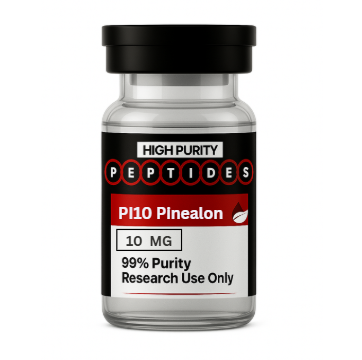
- PI10 Pinealon 10mg × 10 vials — review the listing for identity, format, and available batch documentation.
- PI20 Pinealon 20mg × 10 vials — review the listing for identity, format, and available batch documentation.
- PI5 Pinealon 5mg × 10 vials — review the listing for identity, format, and available batch documentation.
How to evaluate research quality
A rigorous Pinealon SS31 evaluation begins with identity. The listing, material name, salt or counter-ion where relevant, quantity, lot number, and analytical record should agree. High-performance liquid chromatography can describe relative purity, while mass spectrometry can support identity by comparing observed and expected mass. Neither result alone proves biological activity, sterility, or fitness for this project’s protocol.
Study design and evidence limits
For Pinealon SS31 experiments, define the hypothesis and primary endpoint before selecting a material. Document the model, controls, assay validation, acceptance criteria, and statistical plan. A pilot can justify a larger experiment, but it is not confirmation. In-vitro, animal, and controlled human research answer different questions, so results should not be transferred between evidence levels without justification.
Continue researching this topic
- Bronchogen Peptide: Mechanisms, Biology & Research Insights related research overview
- Cardiogen Peptide comparison and evidence guide
- Cardiogen Peptide: Preclinical Research and Study Limitations laboratory quality discussion
Frequently asked questions
What should a laboratory verify before studying Pinealon SS31?
For Pinealon SS31, confirm identity, lot-specific analytical documentation, labeling, chain of custody, and alignment with the predefined protocol. Required tests depend on the project; a stated purity percentage is only one part of qualification.
Is this article personal-use or medical guidance?
No. It does not recommend use, administration, or dosing. Products discussed by High Purity Peptides are intended only for lawful laboratory research and are not for human or veterinary use.
Key takeaway
A credible Pinealon SS31 project starts with a precise question, appropriate controls, traceable material, and cautious interpretation. Use analytical records and primary literature, preserve batch documentation, and report limitations alongside results.
Research-use notice: This content is for educational and laboratory-research purposes only. It is not medical advice. Research materials referenced here are not intended for human or veterinary use, diagnosis, treatment, or prevention of disease.