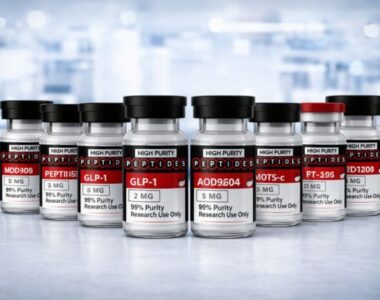
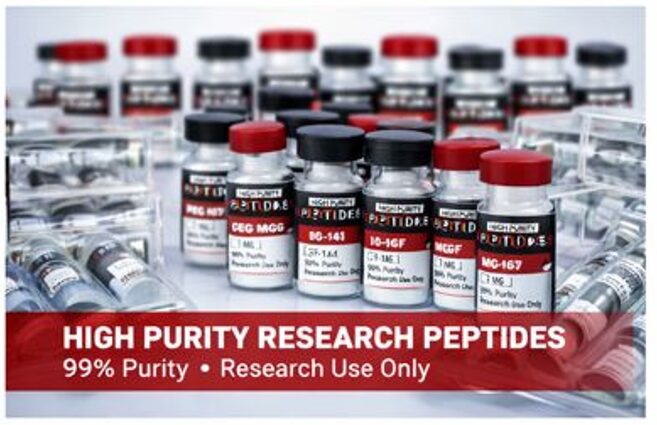
Peptide Sciences Coupon Codes: Verification and Buying Checklist is a topic in laboratory and preclinical research. This resource outlines the scientific context, how to assess the evidence, and which quality controls matter when U.S. laboratories evaluate research materials. It is educational content for qualified research settings—not dosing, treatment, or personal-use guidance. Investigators evaluating materials can review the research peptide catalog and the site’s laboratory quality standards during protocol planning.
Research context and terminology
Brand searches often mix customer commentary with scientific terminology. Supplier evaluation should rely on verifiable batch records, clear labeling, traceability, support responsiveness, and independent analytical evidence rather than promotional language.
The Peptide Sciences coupon code is used by laboratories and research institutions to reduce costs when purchasing research-grade peptides while maintaining high standards for quality, documentation, and reproducibility. When applied responsibly, these coupon codes support budget-conscious preclinical research without compromising experimental integrity.
This resource outlines how researchers can use the Peptide Sciences coupon code safely, how to verify peptide quality , and how to maintain proper laboratory standards when ordering discounted materials.
Research Evidence of Using Peptide Sciences Coupon Codes in Research
Using verified Peptide Sciences coupon codes allows laboratories to:
Purchase sufficient peptide quantities for in vitro and in vivo studies
Explore multi-peptide or combinatorial experiments without exceeding budget limits
Maintain consistent sourcing from suppliers that provide Certificates of Analysis (COA)
Cost savings can make preclinical and exploratory research more feasible while preserving data integrity and reproducibility.
Sourcing and Quality Considerations When Using Coupon Codes
Even when applying Peptide Sciences coupon codes , research-grade quality must remain the top priority. Laboratories should always:
Review Certificates of Analysis (COA) for purity, identity, and concentration
Confirm batch consistency using analytical methods such as HPLC or mass spectrometry
Follow supplier-recommended storage and handling instructions
Comply with institutional, ethical, and regulatory research standards
Discounts should never replace proper verification or quality assurance procedures.
? Suggested outbound link: General guidance on analytical validation methods (e.g., NCBI or institutional lab manuals)
How to Access Verified Peptide Sciences Coupon Codes
Researchers can obtain legitimate Peptide Sciences coupon codes through several reliable channels:
Subscribing to Peptide Sciences newsletters for announcements and promotional updates
University or institutional procurement programs with pre-negotiated supplier discounts
Academic forums or laboratory networks that share verified codes and emphasize safe sourcing
Always confirm that coupon codes originate from trusted sources to avoid fraudulent offers or counterfeit products.
? Internal link suggestion: Guide to sourcing research-grade peptides safely
Handling and Storage Best Practices
Proper handling is essential when working with peptides purchased using the Peptide Sciences coupon code :
Store peptides in cool, dry, and light-protected environments
Keep lyophilized peptides frozen for long-term storage
Avoid repeated freeze–thaw cycles to prevent degradation
How to evaluate research quality
A rigorous Peptide Sciences Coupon Codes: Verification and Buying Checklist evaluation begins with identity. The listing, material name, salt or counter-ion where relevant, quantity, lot number, and analytical record should agree. High-performance liquid chromatography can describe relative purity, while mass spectrometry can support identity by comparing observed and expected mass. Neither result alone proves biological activity, sterility, or fitness for this project’s protocol.
U.S. laboratory procurement checks
Before a U.S. laboratory orders material for a Peptide Sciences Coupon Codes: Verification and Buying Checklist project, purchasing and safety teams should confirm that the work is lawful, approved, and consistent with research-only terms. Preserve the supplier identity, lot and quantity, shipping condition, receipt date, product page, and analytical documents. A mismatch in labeling, seals, quantity, or paperwork is a reason to quarantine the shipment until the discrepancy is resolved.
Reproducibility notes
Reproducible Peptide Sciences Coupon Codes: Verification and Buying Checklist work requires a documented chain of custody, calibrated equipment, validated assays, environmental records, and a log of protocol deviations. Findings are more useful when raw data and exclusion criteria are retained. This guide does not provide preparation, administration, or personal-use instructions.
Continue researching this topic
- Retatrutide Peptide Buy USA: Research-Grade Retatrutide from High Purity Peptides related research overview
- HCG Peptide for Sale—Research-Grade Sourcing, Safety, and Laboratory Guidelines comparison and evidence guide
- High Purity Peptides Supplier laboratory quality discussion
Frequently asked questions
What should a laboratory verify before studying Peptide Sciences Coupon Codes: Verification and Buying Checklist?
For Peptide Sciences Coupon Codes: Verification and Buying Checklist, confirm identity, lot-specific analytical documentation, labeling, chain of custody, and alignment with the predefined protocol. Required tests depend on the planned study; a stated purity percentage is only one part of qualification.
Is this article personal-use or medical guidance?
No. It does not recommend use, administration, or dosing. Products discussed by High Purity Peptides are intended only for lawful laboratory research and are not for human or veterinary use.
Key takeaway
A credible Peptide Sciences Coupon Codes: Verification and Buying Checklist project starts with a precise question, appropriate controls, traceable material, and cautious interpretation. Use analytical records and primary literature, preserve batch documentation, and report limitations alongside results.
Research-use notice: This content is for educational and laboratory-research purposes only. It is not medical advice. Research materials referenced here are not intended for human or veterinary use, diagnosis, treatment, or prevention of disease.