
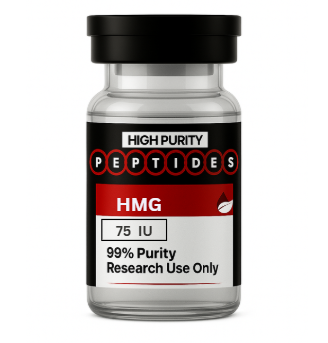
Researchers searching for HMG 75 IU for sale USA need information that supports a documented purchasing decision, not personal-use instructions. HMG is a gonadotropin research material used in controlled endocrine and biochemical investigations. This guide focuses on product identity, analytical evidence, format selection, supplier transparency, and receiving controls for U.S. laboratory procurement.
Define the exact HMG research material
HMG is labeled in international units rather than milligrams, and the unit should be recorded exactly as supplied. Procurement teams should avoid converting units casually or comparing IU-labeled products with mass-labeled peptides as though they were equivalent. Identity and activity-related specifications require appropriate methods.
Current listings may include 75 IU research vials. Labeled quantity is a procurement attribute; it is not a dosing recommendation. Estimate required material from the approved protocol, number of analytical runs, controls, expected repeats, equipment requirements, and permitted storage period.
Where HMG may appear in laboratory research
Examples of legitimate research contexts include:
- endocrine assay development
- gonadotropin characterization studies
- lot-consistency investigations
- controlled analytical comparisons
These are categories of investigation rather than claims of safety, effectiveness, or approved use. A qualified laboratory should define its own controls, acceptance criteria, and analytical methods before acquiring material.
Build an evidence file before purchasing
Product identity
Record the complete product name, stated form, labeled quantity, and format. Where relevant, review sequence, molecular formula, expected molecular mass, counterion, complex, or activity unit. Abbreviations should not hide distinctions between related compounds.
Lot-specific analytical documentation
A useful Certificate of Analysis identifies the sample, lot or batch, method, date, specification, and observed result. HPLC can support a chromatographic purity statement, while a suitable mass-based method may support identity. One result should not be presented as proof of every quality attribute.
Supplier and order transparency
Review the ordering process, shipping information, and support channel before payment. Clear policies reduce uncertainty when a documentation, delivery, or lot question arises.
Compare the complete procurement value
Price per vial is only one part of the decision. Consider whether the listing clearly identifies the material, whether the evidence matches the lot, whether labels support traceability, and whether the supplier can answer a technical documentation question. Time spent correcting unclear records can exceed a small purchase-price difference.
Researchers can compare HMG 75 IU research vials, HCG 5000 IU research vials, gonadorelin acetate research vials. The full research catalog shows current formats and availability. Each linked product remains restricted to laboratory research use.
Receiving and inventory controls
- Compare the delivered product and quantity with the order record.
- Inspect packaging and labels before placing material into active inventory.
- Record the lot, receipt date, condition, and assigned storage location.
- Link the vial, COA, invoice, and internal inventory identifier.
- Quarantine mismatched, damaged, or undocumented material pending review.
Preserve correspondence and the final disposition decision if an issue occurs. This chain of records helps investigate unexpected results and distinguish supplier, shipment, storage, method, instrument, and operator variables.
Avoid unsupported interpretations
Search results may mix research products with medical discussions, community anecdotes, and consumer marketing. Keep those contexts separate. A laboratory listing does not establish clinical safety, efficacy, legal prescribing status, or suitability for self-administration. Review the U.S. research peptide legal guide and HCG research sourcing guide for further context.
Buyer checklist
- Exact compound and format confirmed
- Required quantity justified by the protocol
- Lot-specific COA available
- Identity and purity evidence distinguished
- Research-use label present
- Shipping and receiving plan documented
- Storage and inventory controls ready
Questions researchers commonly ask
Does a larger HMG format indicate better quality?
No. Labeled amount and quality are separate attributes. A larger format may reduce the number of units needed for an approved project, but identity, purity, documentation, storage history, and method compatibility still require review.
Is a 99% purity statement enough to approve a purchase?
Not by itself. Determine how purity was measured, whether the report matches the supplied lot, and what evidence supports molecular identity. A high main-peak percentage cannot answer every quality question.
Should online reviews replace technical documentation?
No. Reviews may describe ordering or communication experiences, but they cannot establish the identity or quality of a specific batch. Use lot-specific evidence and your laboratory’s acceptance process.
After the material enters the study
Link each analytical run to the internal inventory ID and supplier lot. Record transfers, storage excursions, unusual appearance, method deviations, and remaining quantity. If an unexpected result occurs, preserve the material and records until the investigation determines whether additional testing or supplier contact is appropriate.
Before publication or internal reporting, confirm that the cited material identity and lot match the experimental record. This final check prevents product names or strengths from being copied incorrectly into conclusions.
Research-use notice
Research Use Only. Materials discussed are intended solely for laboratory research, analytical testing, and method development. They are not intended for human or animal consumption, diagnosis, treatment, prevention, cosmetic use, or veterinary use. Statements have not been evaluated by the FDA.
