Cardiogen Peptide is a topic in laboratory and preclinical research. This resource outlines the scientific context, how to assess the evidence, and which quality controls matter when U.S. laboratories evaluate research materials. It is educational content for qualified research settings—not dosing, treatment, or personal-use guidance. Investigators evaluating materials can review the research peptide catalog and the site’s laboratory quality standards before planning an experiment.
Research context and terminology
Short peptide bioregulators are marketed with broad claims, while the strength and accessibility of evidence vary widely. Researchers should prioritize primary literature, defined sequences, suitable controls, and reproducible endpoints.
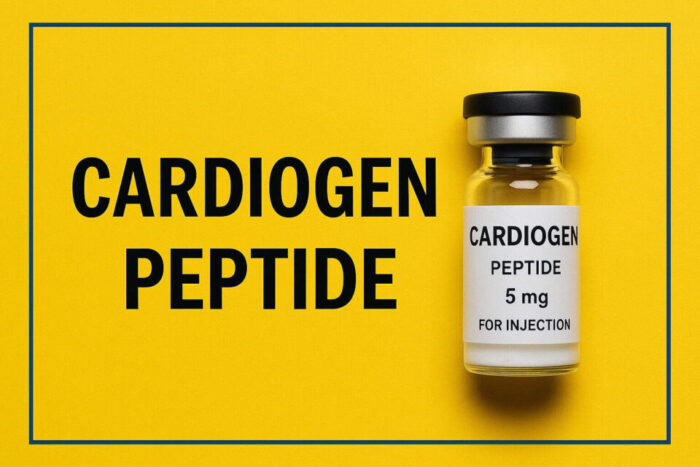
Cardiogen peptide is a short bioactive peptide studied in cardiovascular and regenerative research. It is derived from sequences associated with cardiac tissue signaling and is hypothesized to influence cellular repair pathways, cardiac metabolism, and tissue homeostasis. Its small size and targeted structure make it a valuable research tool in experimental biology.
Unlike full-length hormones or growth factors, Cardiogen functions as a minimal fragment with biological signaling potential. Researchers utilize it to examine effects on cardiac cells, tissue repair processes, and regenerative pathways in controlled laboratory environments.
Cardiogen belongs to a class of peptides often referred to as bioregulators or organ-specific signaling peptides. These molecules are short amino acid sequences derived from larger proteins present in specific tissues—in this case, cardiac tissue. They are hypothesized to carry information that helps maintain normal cellular function and promote tissue homeostasis.
Experimental studies suggest that Cardiogen peptide may influence cardiac muscle cells (cardiomyocytes), supporting repair mechanisms and modulating gene expression associated with stress and injury responses.
Cardiogen peptides are believed to modulate signaling pathways that regulate cell proliferation, differentiation, and repair within cardiac tissue. While the exact molecular mechanisms remain under investigation, the peptide is thought to:
Support cardiomyocyte repair after stress or damage.
Modulate local oxidative stress and inflammatory pathways.
Influence protein synthesis and tissue remodeling within the heart.
These proposed mechanisms make Cardiogen a valuable model peptide for studying cardiovascular biology in preclinical research.
Current research on cardiogen peptide is primarily preclinical. Laboratory studies focus on understanding its role in cardiac regeneration, repair after ischemic injury, and modulation of cellular signaling pathways. Some animal studies have explored its effects on heart tissue recovery, highlighting its potential as a tool for studying cardiac biology.
While promising in experimental models, Cardiogen peptide has not undergone large-scale human clinical trials. Researchers continue to investigate its pharmacokinetics, tissue distribution, and cellular targets to better understand its biological functions.
Cardiogen peptide is distinct from more generalized tissue-repair peptides like BPC-157 or TB-500. Its cardiac-specific origin and proposed mechanisms focus on cardiomyocyte signaling and heart tissue repair. This specificity makes it a useful educational model for studying cardiovascular regenerative biology.
Cardiogen peptide is intended strictly for research purposes. Handling and experimental protocols should follow institutional and regulatory safety guidelines. Its safety profile in humans is not established, and it is not approved for clinical use outside of controlled research studies.
Cardiogen peptides represent an important area of research in cardiovascular and regenerative biology. Its organ-specific signaling properties provide insights into cardiac tissue repair, homeostasis, and cellular signaling pathways. As preclinical studies continue, the Cardiogen peptide remains a valuable model for advancing our understanding of cardiac regenerative mechanisms and organ-specific peptide biology.
How to evaluate research quality
A defensible Cardiogen Peptide evaluation begins with identity. The listing, material name, salt or counter-ion where relevant, quantity, lot number, and analytical record should agree. High-performance liquid chromatography can describe relative purity, while mass spectrometry can support identity by comparing observed and expected mass. Neither result alone proves biological activity, sterility, or fitness for this project’s protocol.
Study design and evidence limits
For Cardiogen Peptide experiments, define the hypothesis and primary endpoint before selecting a material. Document the model, controls, assay validation, acceptance criteria, and statistical plan. A pilot can justify a larger experiment, but it is not confirmation. In-vitro, animal, and controlled human research answer different questions, so results should not be transferred between evidence levels without justification.
Continue researching this topic
- Cardiogen Peptide: Preclinical Research and Study Limitations related research overview
- BPC-157—Research Applications, Mechanism, and Laboratory Considerations comparison and evidence guide
- CJC-1295 No DAC laboratory quality discussion
Frequently asked questions
What should a laboratory verify before studying Cardiogen Peptide?
For Cardiogen Peptide, confirm identity, lot-specific analytical documentation, labeling, chain of custody, and alignment with the predefined protocol. Required tests depend on the experiment; a stated purity percentage is only one part of qualification.
Is this article personal-use or medical guidance?
No. It does not recommend use, administration, or dosing. Products discussed by High Purity Peptides are intended only for lawful laboratory research and are not for human or veterinary use.
Key takeaway
A credible Cardiogen Peptide project starts with a precise question, appropriate controls, traceable material, and cautious interpretation. Use analytical records and primary literature, preserve batch documentation, and report limitations alongside results.
Research-use notice: This content is for educational and laboratory-research purposes only. It is not medical advice. Research materials referenced here are not intended for human or veterinary use, diagnosis, treatment, or prevention of disease.