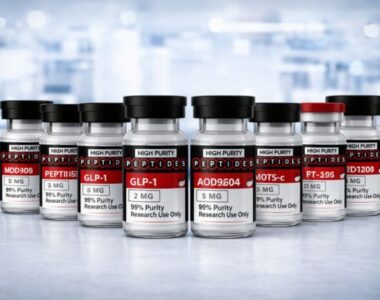
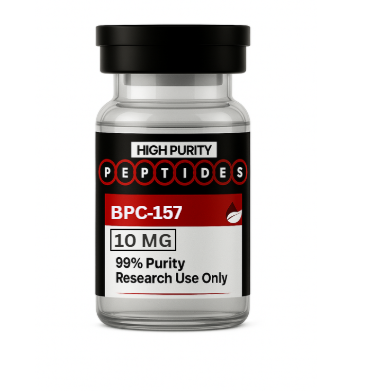
BPC 157 10mg is a topic in laboratory and preclinical research. This resource outlines the scientific context, how to assess the evidence, and which quality controls matter when U.S. laboratories evaluate research materials. It is educational content for qualified research settings—not dosing, treatment, or personal-use guidance. Researchers comparing materials can review the research peptide catalog and the site’s laboratory quality standards before approving a study purchase.
Research context and terminology
Experimental literature around this topic commonly examines signaling associated with tissue models, cell migration, angiogenesis, and inflammatory response. Those endpoints are not interchangeable, and findings from an isolated cell system cannot be assumed to predict an organism-level result.
BPC 157 10mg is a widely researched synthetic peptide recognized for its role in studies related to tissue repair, wound healing, and regenerative medicine. Due to its stability and broad biological activity, BPC 157 has become a valuable research compound for investigating connective tissue recovery, muscle repair , and vascular regeneration pathways.
Researchers consistently seek high-purity BPC 157 to ensure accurate, reproducible results in laboratory and preclinical models. Proper sourcing, handling, and storage are essential to maintain peptide integrity and experimental reliability.
This article provides a comprehensive overview of BPC 157 10mg, including its properties, research applications, quality standards, storage guidelines, and considerations when purchasing from reputable suppliers.
BPC 157 (Body Protection Compound 157) is a synthetic peptide derived from a naturally occurring protein fragment found in gastric juice. In research settings, the 10mg format is commonly used due to its versatility and suitability for multiple experimental protocols.
BPC 157 is studied for its interaction with cellular repair mechanisms, angiogenesis, and signaling pathways involved in tissue regeneration. Its stability in laboratory conditions makes it particularly useful for extended experimental studies.
Key Research Applications of BPC 157
BPC 157 10mg is used across a wide range of research disciplines focused on tissue integrity and recovery.
Tissue repair and regeneration: Investigating healing processes in tendons, ligaments, and connective tissue
Wound healing research: Studying cellular migration and repair signaling pathways
Muscle recovery studies: Evaluating muscle fiber repair and adaptation mechanisms
Vascular research: Examining angiogenesis and blood vessel repair
Gastrointestinal research: Exploring protective and regenerative effects on gut tissue
These applications make BPC 157 a key research peptide in regenerative and recovery-focused studies.
High purity is critical when working with BPC 157, as impurities may interfere with biological responses and experimental accuracy. Laboratory teams should ensure the peptide meets strict laboratory standards.
Purity ≥ 98% , confirmed through analytical testing
Certificate of Analysis (COA) for each batch
Batch-specific verification and traceability
Clear storage and handling documentation
Adhering to these standards supports consistency and reproducibility in research outcomes.
BPC 157 is frequently used in experimental models focused on repair and regeneration.
Connective tissue research: Studying tendon-to-bone healing and ligament integrity
Muscle regeneration studies: Investigating recovery after stress or injury models
Vascular repair: Exploring endothelial protection and blood vessel formation
Inflammation-related pathways: Examining cellular responses involved in healing
Regenerative medicine research: Supporting broader studies on tissue resilience and recovery
Proper storage and handling are essential to maintain the stability and biological activity of BPC 157 10mg.
Store lyophilized peptide in a cool, dry environment
Use sterile techniques, gloves, and aseptic tools to prevent contamination
Relevant research materials
- GLOW (BPC 157 10mg + GHK-CU 50mg + TB500 10mg) 70mg × 10 vials — review the listing for identity, format, and available batch documentation.
- BPC 157 10mg + TB 500 10mg | 20mg × 10 Vial — review the listing for identity, format, and available batch documentation.
- BPC‑157 10mg × 10 Vials — review the listing for identity, format, and available batch documentation.
How to evaluate research quality
A well-documented BPC 157 10mg evaluation begins with identity. The listing, material name, salt or counter-ion where relevant, quantity, lot number, and analytical record should agree. High-performance liquid chromatography can describe relative purity, while mass spectrometry can support identity by comparing observed and expected mass. Neither result alone proves biological activity, sterility, or fitness for this project’s protocol.
Study design and evidence limits
For BPC 157 10mg experiments, define the hypothesis and primary endpoint before selecting a material. Log the model, controls, assay validation, acceptance criteria, and statistical plan. A pilot can justify a larger experiment, but it is not confirmation. In-vitro, animal, and controlled human research answer different questions, so results should not be transferred between evidence levels without justification.
Continue researching this topic
- BPC 157 for Sale related research overview
- High-Purity BPC-157 Peptide Powder for Laboratory Research comparison and evidence guide
- BPC-157: Understanding Cost-Influencing Factors in Research laboratory quality discussion
Frequently asked questions
What should a laboratory verify before studying BPC 157 10mg?
For BPC 157 10mg, confirm identity, lot-specific analytical documentation, labeling, chain of custody, and alignment with the predefined protocol. Required tests depend on the planned study; a stated purity percentage is only one part of qualification.
Is this article personal-use or medical guidance?
No. It does not recommend use, administration, or dosing. Products discussed by High Purity Peptides are intended only for lawful laboratory research and are not for human or veterinary use.
Key takeaway
A credible BPC 157 10mg project starts with a precise question, appropriate controls, traceable material, and cautious interpretation. Use analytical records and primary literature, preserve batch documentation, and report limitations alongside results.
Research-use notice: This content is for educational and laboratory-research purposes only. It is not medical advice. Research materials referenced here are not intended for human or veterinary use, diagnosis, treatment, or prevention of disease.